Aceclofenac + Paracetamol 50mg + 125mg/5ml Suspension
Reviewed educational reference: what Aceclofenac + Paracetamol is used for, how it works, its side effects and safety advice, plus the Indian brands that contain it.
 Reviewed by Sohan Lal Kushwaha
- Molecule
- Aceclofenac + Paracetamol
- Strength
- 50mg + 125mg/5ml
- Dosage form
- Suspension
- Drug class
- NSAID and Analgesic
Related products
No reviewed products are currently published for this generic.
Aceclofenac + Paracetamol 50mg + 125mg/5ml Suspension is a combination medication containing Aceclofenac + Paracetamol. It combines the anti-inflammatory power of Aceclofenac with the pain-relieving and fever-reducing properties of Paracetamol. This suspension form is specifically designed for patients who have difficulty swallowing tablets or for pediatric use under strict medical supervision. By targeting pain through two different pathways, Aceclofenac + Paracetamol 50mg + 125mg/5ml Suspension provides a more comprehensive approach to managing acute pain and inflammation than either drug could achieve alone at low doses. It is widely used in India for managing musculoskeletal pain and fever associated with inflammatory conditions.
At a glance
Aceclofenac + Paracetamol 50mg + 125mg/5ml Suspension is a combination of Aceclofenac and Paracetamol in suspension form.
It reduces pain, inflammation, and fever through dual action on the body.
It is primarily used for joint pain, muscle injuries, and acute fever.
Uses of Aceclofenac + Paracetamol
- Reduction of high grade fever in inflammatory conditions.
- Management of acute pain associated with osteoarthritis.
- Relief from joint pain and swelling in rheumatoid arthritis.
- Treatment of acute muscular sprains and strains.
- Management of post-operative pain and swelling.
- Relief from dental pain and inflammation after oral surgery.
Benefits of Aceclofenac + Paracetamol
Synergistic Pain Relief: The combination of Aceclofenac + Paracetamol allows for a dual mechanism of action. While Aceclofenac reduces the production of prostaglandins at the site of injury to lower inflammation, Paracetamol works centrally to increase the pain threshold. This means you get better pain relief with lower doses of each individual component.
Improved Gastric Tolerance: Aceclofenac is designed to be more selective and generally causes fewer gastrointestinal side effects than older NSAIDs like diclofenac. When combined with Paracetamol, the overall dose of the NSAID can be kept lower, which further reduces the risk of stomach irritation and ulcers.
Side effects of Aceclofenac + Paracetamol
Most patients tolerate Aceclofenac + Paracetamol 50mg + 125mg/5ml Suspension well, but some may experience side effects. The most common issues are gastrointestinal, such as nausea, indigestion, or stomach pain. Some people may notice a decrease in appetite or a feeling of bloating. In rare cases, skin rashes or itching may occur, which could indicate an allergic reaction. More serious but uncommon side effects include swelling of the ankles or feet due to fluid retention. Some patients may experience dizziness or a mild headache. If you notice dark stools or vomit that looks like coffee grounds, stop the medication immediately as this may indicate internal bleeding.
| Side effect | How common | How severe | What to do |
|---|---|---|---|
| Dyspepsia and Nausea | Common | Mild | Take the medicine after food. |
| Peripheral Edema | Uncommon | Moderate | Reduce salt intake. |
| Hepatotoxicity | Rare | Severe | Avoid alcohol completely. |
How to manage side effects
Dyspepsia and Nausea
- Administer with milk
- Use a proton pump inhibitor if prescribed
- Avoid spicy foods
Peripheral Edema
- Monitor weight daily
- Check blood pressure
- Consult doctor for diuretic use
Hepatotoxicity
- Immediate cessation of drug
- Liver function tests
- Administer N-acetylcysteine if indicated
How to use Aceclofenac + Paracetamol
- Shake the bottle well before every use to ensure the medicine is evenly mixed.
- Use the provided measuring cup or syringe to ensure you take the exact dose prescribed by your doctor.
- Take the suspension after a full meal or with milk to protect your stomach lining.
- Do not exceed the maximum daily dose, as this can lead to severe liver or kidney damage.
Special population advice
Kidney impairment
- Avoid use if creatinine clearance is below 30 ml/min.
- Reduce dose by 50 percent in moderate impairment.
Liver impairment
- Avoid high doses of paracetamol in Child-Pugh Class B or C.
- Monitor liver enzymes regularly.
Children
- Dosing must be based on body weight (mg/kg).
- Avoid use in children with known asthma.
Elderly
- Start with the lowest possible dose.
- Monitor for signs of occult gastrointestinal bleeding.
How Aceclofenac + Paracetamol works
Aceclofenac + Paracetamol 50mg + 125mg/5ml Suspension works through two distinct mechanisms. Aceclofenac inhibits the enzymes COX-1 and COX-2, which prevents the synthesis of prostaglandins that cause pain and swelling. Paracetamol acts primarily on the central nervous system to block pain signals and acts on the hypothalamus to lower body temperature during a fever.
What if you miss or exceed a dose?
If you miss a dose
If you miss a dose of Aceclofenac + Paracetamol 50mg + 125mg/5ml Suspension, take it as soon as you remember. However, if it is almost time for your next dose, skip the missed one. Do not take a double dose to make up for a forgotten one, as this increases the risk of toxicity.
In case of overdose
An overdose of Aceclofenac + Paracetamol 50mg + 125mg/5ml Suspension is a medical emergency. Paracetamol overdose can cause severe liver failure, while Aceclofenac overdose can lead to gastrointestinal bleeding or kidney failure. Symptoms may include nausea, vomiting, extreme drowsiness, or yellowing of the skin and eyes. Seek immediate hospital care.
Specifically for the paracetamol component to prevent liver necrosis.
- Gastric Decontamination
- Activated charcoal may be administered if the patient presents within 1 to 2 hours.
- Liver Support
- Monitor ALT, AST, and bilirubin levels closely for 48 to 72 hours.
- Renal Monitoring
- Check urine output and serum creatinine to detect acute kidney injury.
- Symptomatic Care
- IV fluids to maintain hydration and protect renal function.
Safety and precautions
When to avoid Aceclofenac + Paracetamol
- Active Peptic Ulcer
Can cause severe gastrointestinal bleeding and perforation.
- Severe Hepatic Failure
Paracetamol is hepatotoxic in severe liver disease.
- Asthma
May trigger bronchospasm in sensitive individuals.
- Chronic Kidney Disease
Can further reduce renal blood flow and worsen function.
- Hypertension
NSAIDs can increase blood pressure and interfere with BP meds.
- Coagulation Disorders
Increases the risk of bleeding due to anti-platelet effects.
Safety at a glance
Avoid alcohol as it increases the risk of stomach bleeding and liver toxicity.
Do not use in the third trimester as it can harm the fetal heart and kidneys.
Consult your doctor as these components may pass into breast milk.
Use with care if you feel dizzy or drowsy after taking the dose.
Use with extreme caution in renal impairment. Dose adjustment is necessary.
Avoid or use low doses in severe liver disease due to paracetamol toxicity.
Do not take if you are allergic to aspirin or other NSAIDs.
Use only under strict medical supervision with weight based dosing.
Higher risk of GI bleeding and kidney issues. Use the lowest effective dose.
Interactions
With other medicines
Warfarin
MajorChanges the medicine’s effect
What can happen: Increased risk of bleeding due to antiplatelet effect.
What to do: Monitor INR closely and adjust warfarin dose.
Furosemide
ModerateChanges the medicine’s effect
What can happen: Reduced diuretic and antihypertensive effect.
What to do: Monitor blood pressure and fluid retention.
Lithium
MajorChanges how the medicine is processed
What can happen: Increased serum lithium levels leading to toxicity.
What to do: Avoid combination or monitor lithium levels strictly.
With food and drink
- AlcoholMajor
Increases risk of gastric mucosal damage and liver failure.
- Dairy ProductsMinor
Taking with milk is recommended to reduce stomach irritation.
If you have another condition
- Heart Failure
May cause fluid retention and worsen heart failure symptoms.
- Gastritis
Can aggravate inflammation of the stomach lining.
Effect on laboratory tests
- Blood Glucose
May slightly alter readings
NSAIDs can occasionally affect glucose levels in diabetic patients.
- Prothrombin Time (PT)
Increased PT
Aceclofenac can inhibit platelet aggregation, prolonging clotting time.
Quick tips
- Always take Aceclofenac + Paracetamol 50mg + 125mg/5ml Suspension after food to avoid stomach upset.
- Avoid taking other medicines containing paracetamol, such as some cold and flu remedies, to prevent overdose.
- Drink plenty of water throughout the day to help your kidneys process the medication.
- Inform your doctor if you have a history of asthma or stomach ulcers before starting this treatment.
Counselling points
- AdministrationImportant
Always take this medicine after a meal to protect your stomach.
- DosingImportant
Use the measuring device provided. Do not use a household spoon.
- Warning SignsImportant
Stop use and call your doctor if you see black stools or feel severe stomach pain.
- Drug OverlapGood to know
Avoid other pain killers or cold medicines without asking your doctor.
Pharmacokinetics
- Absorption
- Rapidly absorbed from the gastrointestinal tract.
- Bioavailability
- High for both components.
- Protein binding
- Aceclofenac is highly protein bound.
- Volume of distribution
- Distributed widely in tissues.
- Half-life
- Aceclofenac has a half life of about 4 to 6 hours.
- Metabolism
- Aceclofenac is metabolized in the liver to diclofenac. Paracetamol is metabolized via glucuronidation and sulfation.
- Excretion
- Primarily excreted through the urine.
- Onset / duration
- Onset of action is 30 to 60 minutes, lasting 6 to 12 hours.
Fact box
- Chemical class
- Arylacetic acid derivative and Para-aminophenol derivative
- Habit forming
- No
- Therapeutic class
- Analgesic, Antipyretic, and Anti-inflammatory
- Action class
- COX Inhibitor and Central Analgesic
- Storage
- Store the bottle in a cool, dry place below 25 degrees Celsius. Keep it away from direct sunlight and out of reach of children.
- ATC code
- M01AE
- Pregnancy category
- C
More information
Why Clinicians Choose This Combination
Clinicians often prefer the combination of Aceclofenac + Paracetamol over single agent therapy because of the concept of additive analgesia. Paracetamol is an excellent antipyretic and mild analgesic but lacks significant anti-inflammatory properties. Aceclofenac is a potent NSAID that reduces swelling and inflammation but can be harsh on the stomach if used at high doses. By combining them, the physician can achieve a superior level of pain control while keeping the dose of the NSAID low. This reduces the risk of gastric ulcers and renal toxicity. In the Indian clinical setting, this is particularly useful for acute flare-ups of arthritis or severe dental pain where both inflammation and intense pain are present.
Comparison with Other NSAIDs
When compared to traditional NSAIDs like Diclofenac or Ibuprofen, Aceclofenac is generally better tolerated by the gastrointestinal tract. It is a prodrug that is converted to diclofenac in the body, but its initial form is less irritating to the stomach lining. The addition of Paracetamol provides a 'buffer' effect, allowing the patient to feel relief faster. Unlike corticosteroids, Aceclofenac + Paracetamol 50mg + 125mg/5ml Suspension does not cause systemic issues like weight gain or glucose elevation, making it a safer short term choice for patients with diabetes. However, it is not as potent as opioids for severe chronic pain, but it avoids the risk of addiction and respiratory depression.
Dietary and Lifestyle Considerations
The most critical lifestyle advice for a patient on Aceclofenac + Paracetamol 50mg + 125mg/5ml Suspension is the avoidance of alcohol. Alcohol increases the production of acid in the stomach and, combined with an NSAID, significantly raises the risk of a perforated ulcer. Furthermore, since both Aceclofenac and Paracetamol are processed by the liver, alcohol adds an extra burden that can lead to hepatotoxicity. Patients are encouraged to maintain high fluid intake to support kidney function. A diet rich in fiber and avoiding extremely spicy foods can also help minimize the gastrointestinal side effects associated with NSAID therapy.
What to Expect During Treatment
Patients should expect a reduction in fever and pain within the first hour of administration. However, the reduction in joint swelling and inflammation usually takes several days of consistent dosing. It is important to understand that Aceclofenac + Paracetamol 50mg + 125mg/5ml Suspension treats the symptoms, not the underlying cause of the disease. If the pain does not improve within three to five days, a reassessment is necessary. Patients should be warned that long term use can lead to a 'masking' of symptoms, where the underlying condition worsens while the pain is suppressed. The goal is always to use the lowest effective dose for the shortest possible duration.
References
- Tripathi KD. Essentials of Medical Pharmacology. 8th ed. Jaypee Brothers Medical Publishers, 2019. p. 221, 223-24.Accessed
- Electronic Medicines Compendium. Aceclofenac Summary of Product Characteristics.View sourceAccessed
- NAFDAC. SmPC Aceclofenac.View sourceAccessed
- Pharmacy Board of Kenya. Flamofenac Product Information.View sourceAccessed
- NAFDAC Greenbook. Aceclofenac SmPC.View sourceAccessed
Frequently asked questions about Aceclofenac + Paracetamol
Can I take this on an empty stomach?
No, you should always take Aceclofenac + Paracetamol 50mg + 125mg/5ml Suspension after food or with milk to prevent stomach irritation and ulcers.
How long does it take to start working?
Pain relief usually begins within 30 to 60 minutes, though the full anti-inflammatory effect may take a few days.
Is it safe for long term use?
No, this medication is intended for short term relief. Long term use can damage the kidneys and stomach lining.
Can I take this with a cold medicine?
Check the ingredients of your cold medicine first. Many contain paracetamol, and taking both could lead to a dangerous overdose.
What should I do if I develop a rash?
Stop taking the medication immediately and contact your doctor, as this could be an allergic reaction.
Registered pharmacist and regulatory affairs professional with 7+ years of experience in healthcare and medical content writing. Dedicated to translating complex pharmaceutical regulations and clinical insights into clear, evidence-based knowledge
Registered pharmacist and regulatory affairs professional with 7+ years of experience in healthcare and medical content writing. Dedicated to translating complex pharmaceutical regulations and clinical insights into clear, evidence-based knowledge
Last reviewed on
Most bought this month
 1Crocin Advance 500 TabletGlaxoSmithKline Pharmaceuticals Ltd₹22.25
- 2Glycomet 500 TabletUSV Pvt Ltd₹18.80
- 3Mox 500 CapsuleSun Pharmaceutical Industries Ltd₹72.80
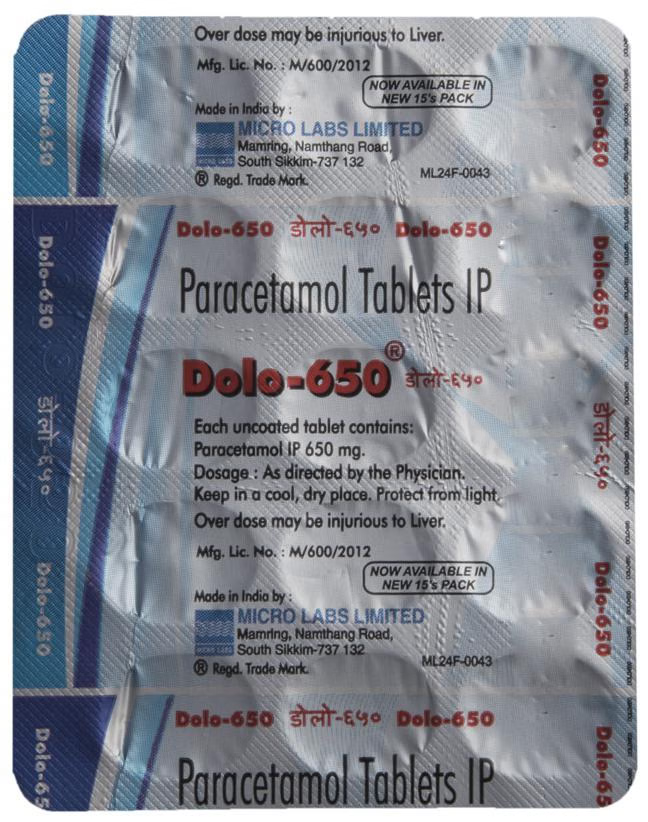 4Dolo 650 TabletMicro Labs Ltd₹33.90
- 5Cetzine TabletGlaxoSmithKline Pharmaceuticals Ltd₹25.70
Ranked by how often readers opened a partner link in the last 30 days.
All medicines →