Paracetamol 325mg Tablet
Reviewed educational reference: what Paracetamol is used for, how it works, its side effects and safety advice, plus the Indian brands that contain it.
- Molecule
- Paracetamol
- Strength
- 325mg
- Dosage form
- tablet
- Drug class
- Analgesic / Antipyretic
Related products
No reviewed products are currently published for this generic.
Paracetamol 325mg Tablet contains Paracetamol (acetaminophen), one of the most widely used medicines for reducing fever and relieving mild to moderate pain. It is generally well tolerated at the recommended dose and is gentler on the stomach than most other common pain relievers.
At a glance
Paracetamol 325mg Tablet (325mg tablet)
Turns down fever and dulls pain by raising the body's pain threshold and acting on the brain's heat-regulating centre.
Fever, body pain, headache, period pain, toothache, and the aches of cold and flu.
Uses of Paracetamol
- Fever
- Headache and migraine
- Body ache and muscle pain
- Toothache and dental pain
- Aches associated with cold and flu
- Period (menstrual) pain
Benefits of Paracetamol
Pain relief: Paracetamol 325mg Tablet blocks the chemical messengers in the brain that signal pain, easing headaches and everyday aches without irritating the stomach lining the way NSAIDs can.
Fever reduction: It acts on the heat-regulating centre in the brain to bring a raised body temperature back toward normal, usually within 30 to 60 minutes of a dose.
Side effects of Paracetamol
Most people experience no side effects at the recommended dose. Uncommon effects include nausea and skin rash.
- Seek medical help immediately for signs of an allergic reaction (swelling of the face or throat, difficulty breathing) or a severe skin reaction (blistering, peeling).
- Taking more than the recommended amount can cause serious liver damage, even before any symptoms appear.
| Side effect | How common | How severe | What to do |
|---|---|---|---|
| Nausea, stomach discomfort | Uncommon | Mild | Take with food; sip fluids. Settles on its own. |
| Skin rash | Uncommon | Mild | Stop the medicine if it worsens; consult a doctor. |
| Liver injury (with overdose) | Rare | Severe | Emergency care - see the overdose protocol below. |
| Low platelet count | Rare | Moderate | Report unusual bruising or bleeding to a doctor. |
| Allergic reaction / angioedema | Rare | Life-threatening | Stop immediately and seek emergency care. |
How to manage side effects
Nausea, stomach discomfort
- Sip water, ginger tea or clear soups slowly
- Eat small, bland meals - crackers, toast, rice
- Avoid strong smells and spicy food
- Rest; avoid sudden movements
Skin rash
- Stop the medicine and note the timing
- Avoid scratching; loose cotton clothing helps
- Seek urgent care for blistering or peeling
- Tell every future caregiver about the reaction
Liver injury (with overdose)
- Go to hospital immediately
- Do not wait for symptoms - liver injury can be silent for 24 hours
Low platelet count
- Report unusual bruising or bleeding
- Do not stop the medicine on your own - ask a doctor first
Allergic reaction / angioedema
- Stop the medicine immediately
- Seek emergency care for swelling, breathlessness or rash
- Avoid paracetamol in every future product
How to use Paracetamol
- Swallow the tablet whole with a glass of water; do not chew or crush it.
- It can be taken with or without food, but taking it after food reduces the chance of stomach upset.
- Leave a gap of at least 4 to 6 hours between doses.
- Do not take more than 4 doses (a maximum of 4 g of Paracetamol in total) in 24 hours.
Special population advice
Kidney impairment
- eGFR 10-50: extend the gap between doses to ~6 hours
- eGFR <10: only under medical supervision
Liver impairment
- Avoid in severe impairment or active liver disease
- Chronic liver disease or regular alcohol use: cap at 2 g/day, ask a doctor
Children
- Not for children under 10-12 years
- Younger children: paediatric form, 10-15 mg/kg per dose
Elderly
- Lowest effective dose, shortest duration
- Review liver function and other medicines regularly
How Paracetamol works
Paracetamol 325mg Tablet works mainly in the brain and spinal cord. It reduces the production of prostaglandins - chemical messengers that cause pain and raise body temperature - by inhibiting cyclo-oxygenase (COX) enzymes centrally.
What if you miss or exceed a dose?
If you miss a dose
Paracetamol 325mg Tablet is usually taken only when needed. If you are on a schedule and miss a dose, take it as soon as you remember - unless it is almost time for the next dose. Never take a double dose to make up for a missed one.
In case of overdose
An overdose of Paracetamol 325mg Tablet can cause serious, sometimes fatal, liver damage. Symptoms may not appear for 24 hours or more, so seek emergency medical care immediately after a suspected overdose even if you feel well.
Most effective within 8-10 hours of ingestion; still beneficial later. Given in hospital only.
- Activated charcoal
- May be considered within 1 hour of ingestion, on medical advice.
- Blood level
- 4-hour post-ingestion paracetamol level where available (Rumack-Matthew nomogram).
- Monitoring
- LFTs, INR, serum creatinine and glucose at baseline, then at least every 24 hours.
- Do not wait
- Go to hospital even with no symptoms - liver injury can be silent for a day.
Safety and precautions
When to avoid Paracetamol
- Known allergy to paracetamol or any ingredient of the tablet
Stop and seek emergency care for rash, swelling or breathlessness.
- Severe hepatic impairment or active liver disease
Unless a doctor specifically advises it.
- Chronic alcohol use, malnutrition or low body weight
Higher liver-injury risk.
- Sepsis or severe infection
- Severe kidney disease
- Already taking warfarin, antiepileptics or other paracetamol-containing products
Safety at a glance
Avoid alcohol; the combination increases the risk of liver damage.
Generally considered the preferred pain reliever in pregnancy, but use only at the lowest effective dose after consulting a doctor.
Considered safe during breastfeeding; only small amounts pass into breast milk.
Does not usually affect the ability to drive or use machines.
Use with caution in significant kidney disease; a longer gap between doses may be needed.
Use with caution in liver disease and avoid in severe liver impairment; ask a doctor first.
Do not take if allergic to paracetamol or any excipient. Rash, swelling or breathlessness means stop and seek emergency care.
Not recommended below 10-12 years. Use weight-based paediatric preparations instead.
Lowest effective dose for the shortest time; review liver function and co-medicines periodically.
Interactions
With other medicines
Warfarin and other blood thinners
MajorChanges the medicine’s effect
What can happen: Regular daily paracetamol can raise bleeding risk (unusual bruising, blood in urine or stools).
What to do: Occasional doses are usually acceptable; the doctor monitors INR. Report any bleeding signs.
Other paracetamol-containing products
MajorChanges the medicine’s effect
What can happen: Cumulative overdose and liver damage.
What to do: Check every label; count paracetamol from all sources against the 4 g/day ceiling.
Carbamazepine, phenytoin, rifampicin
ModerateChanges how the medicine is processed
What can happen: Increased risk of liver injury with regular dosing.
What to do: Keep courses short; the doctor may monitor liver function.
SSRI antidepressants (with blood thinners)
ModerateChanges the medicine’s effect
What can happen: Added bleeding risk when combined with anticoagulants.
What to do: Tell your doctor about every medicine; monitor for bruising.
Cholestyramine
MinorChanges how the medicine is processed
What can happen: Reduced paracetamol absorption and effect.
What to do: Separate the doses by at least 1 hour.
With food and drink
- AlcoholMajor
Both are processed by the liver; combined use raises liver-damage risk (jaundice, fatigue, dark urine). Avoid entirely.
- CaffeineMinor
Tea, coffee, cola and chocolate may slightly reduce relief or upset sensitive stomachs. Keep intake moderate.
- High-fat mealsMinor
Can delay absorption, slowing onset of relief. Prefer light meals when taking it for acute pain.
If you have another condition
- Chronic alcohol use or malnutrition
Higher liver-injury risk with regular use.
- Sepsis or severe infection
May increase the risk of liver injury; use under medical supervision.
- Active liver disease
Avoid unless a doctor specifically advises it.
Quick tips
- Many cold, flu and combination pain medicines already contain Paracetamol - check labels so you do not double up.
- Avoid alcohol while taking Paracetamol 325mg Tablet; the combination increases the risk of liver damage.
- See a doctor if fever lasts more than 3 days or pain lasts more than 5 days despite treatment.
- For children, use a paediatric preparation dosed by body weight, not adult tablets.
Pharmacokinetics
- Absorption
- Rapid; peak in 0.5-1 hour
- Bioavailability
- ~63-89%
- Protein binding
- 10-25%
- Volume of distribution
- ~0.9 L/kg
- Half-life
- 2-3 hours
- Metabolism
- Liver glucuronidation and sulfation; minor CYP2E1 to NAPQI
- Excretion
- Renal (metabolites)
- Onset / duration
- Onset 30-60 min; duration 4-6 hours
Fact box
- Chemical class
- Para-aminophenol derivative
- Habit forming
- No
- Therapeutic class
- Analgesic and antipyretic
- Action class
- Central COX inhibitor
- Storage
- Store below 25°C in a dry place, protected from light. Keep out of reach of children.
- ATC code
- N02BE01
Frequently asked questions about Paracetamol
How quickly does Paracetamol 325mg Tablet work?
It usually starts relieving pain and fever within 30 to 60 minutes, and the effect lasts about 4 to 6 hours.
Can I take Paracetamol 325mg Tablet with ibuprofen?
They can be combined for short periods in adults if a doctor advises it, since they work in different ways - but do not combine them on your own for children.
What is the maximum safe dose in a day?
Adults should not exceed 4 g of Paracetamol in 24 hours from all sources, including combination cold and flu remedies.
Is Paracetamol 325mg Tablet an antibiotic?
No. It only relieves pain and fever; it does not treat the infection causing them.
Combination medicines containing Paracetamol
These are fixed-dose combinations, each approved and described as a medicine in its own right. Their uses, cautions and interactions are not the same as those of Paracetamol on its own.
NSAID + analgesic/antipyretic combination
Aceclofenac 100mg + Paracetamol 325mg Tablet
1 published product
Explore generic →Most bought this month
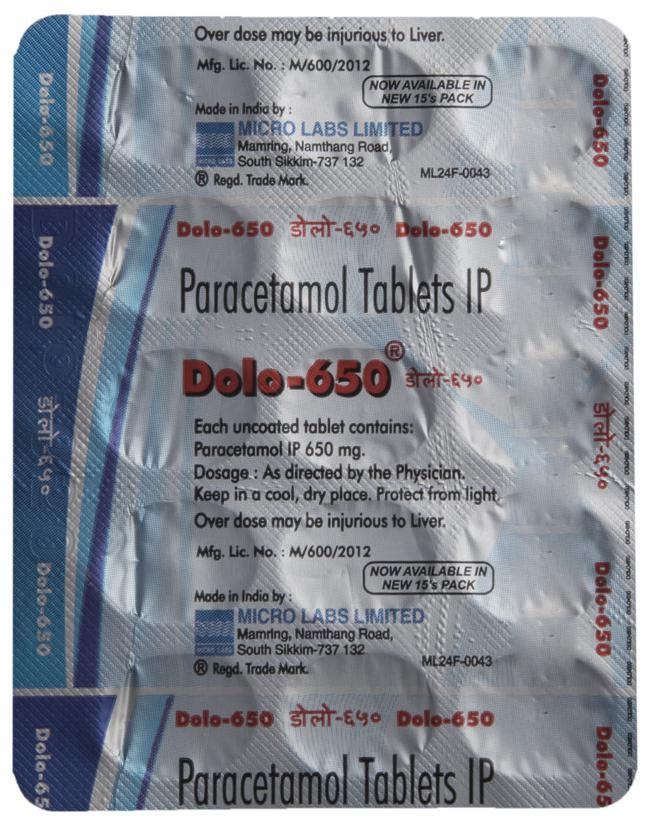 1Dolo 650 TabletMicro Labs Ltd₹33.90
 2Calpol 650 TabletGlaxoSmithKline Pharmaceuticals Ltd₹30.50
- 3Mox 500 CapsuleSun Pharmaceutical Industries Ltd₹72.80
- 4Crocin Advance 500 TabletGlaxoSmithKline Pharmaceuticals Ltd₹22.25
- 5Cetzine TabletGlaxoSmithKline Pharmaceuticals Ltd₹25.70
Ranked by how often readers opened a partner link in the last 30 days.
All medicines →