Paracetamol 500mg Tablet
Reviewed educational reference: what Paracetamol is used for, how it works, its side effects and safety advice, plus the Indian brands that contain it.
 Reviewed by Sohan Lal Kushwaha
 - Molecule
- Paracetamol
- Strength
- 500mg
- Dosage form
- Tablet
- Drug class
- Analgesic and Antipyretic
Related products
Paracetamol 500mg Tablet contains Paracetamol (acetaminophen), one of the most widely used medicines for reducing fever and relieving mild to moderate pain. It is generally well tolerated at the recommended dose and is gentler on the stomach than most other common pain relievers.
At a glance
Paracetamol 500mg Tablet (500mg Tablet)
Turns down fever and dulls pain by raising the body's pain threshold and acting on the brain's heat-regulating centre.
Fever, body pain, headache, period pain, toothache, and the aches of cold and flu.
Uses of Paracetamol
- Reduction of high body temperature during viral infections and flu
- Relief of tension headaches and migraines
- Management of mild to moderate musculoskeletal pain
- Treatment of dental pain and post-operative tooth extraction soreness
- Alleviation of menstrual cramps and primary dysmenorrhea
- Control of joint pain associated with osteoarthritis
- Reduction of fever following vaccinations in adults
Benefits of Paracetamol
Pain relief: Paracetamol 500mg Tablet blocks the chemical messengers in the brain that signal pain, easing headaches and everyday aches without irritating the stomach lining the way NSAIDs can.
Fever reduction: It acts on the heat-regulating centre in the brain to bring a raised body temperature back toward normal, usually within 30 to 60 minutes of a dose.
Side effects of Paracetamol
Most people experience no side effects at the recommended dose. Uncommon effects include nausea and skin rash.
- Seek medical help immediately for signs of an allergic reaction (swelling of the face or throat, difficulty breathing) or a severe skin reaction (blistering, peeling).
- Taking more than the recommended amount can cause serious liver damage, even before any symptoms appear.
| Side effect | How common | How severe | What to do |
|---|---|---|---|
| Nausea, stomach discomfort | Uncommon | Mild | Take with food; sip fluids. Settles on its own. |
| Skin rash | Uncommon | Mild | Stop the medicine if it worsens; consult a doctor. |
| Liver injury (with overdose) | Rare | Severe | Emergency care - see the overdose protocol below. |
| Low platelet count | Rare | Moderate | Report unusual bruising or bleeding to a doctor. |
| Allergic reaction / angioedema | Rare | Life-threatening | Stop immediately and seek emergency care. |
How to manage side effects
Nausea, stomach discomfort
- Sip water, ginger tea or clear soups slowly
- Eat small, bland meals - crackers, toast, rice
- Avoid strong smells and spicy food
- Rest; avoid sudden movements
Skin rash
- Stop the medicine and note the timing
- Avoid scratching; loose cotton clothing helps
- Seek urgent care for blistering or peeling
- Tell every future caregiver about the reaction
Liver injury (with overdose)
- Go to hospital immediately
- Do not wait for symptoms - liver injury can be silent for 24 hours
Low platelet count
- Report unusual bruising or bleeding
- Do not stop the medicine on your own - ask a doctor first
Allergic reaction / angioedema
- Stop the medicine immediately
- Seek emergency care for swelling, breathlessness or rash
- Avoid paracetamol in every future product
How to use Paracetamol
- Swallow the tablet whole with a glass of water.
- Take the medication after food if you have a very sensitive stomach, although it can be taken on an empty stomach.
- Maintain a gap of at least 4 to 6 hours between consecutive doses.
- Do not exceed 4 grams (8 tablets of 500mg) in a 24 hour period.
- Stop using Paracetamol 500mg Tablet if the fever lasts more than 3 days or pain lasts more than 5 days without improvement.
Special population advice
Kidney impairment
- eGFR 10-50: extend the gap between doses to ~6 hours
- eGFR <10: only under medical supervision
Liver impairment
- Avoid in severe impairment or active liver disease
- Chronic liver disease or regular alcohol use: cap at 2 g/day, ask a doctor
Children
- Not for children under 10-12 years
- Younger children: paediatric form, 10-15 mg/kg per dose
Elderly
- Lowest effective dose, shortest duration
- Review liver function and other medicines regularly
How Paracetamol works
Paracetamol 500mg Tablet works mainly in the brain and spinal cord. It reduces the production of prostaglandins - chemical messengers that cause pain and raise body temperature - by inhibiting cyclo-oxygenase (COX) enzymes centrally.
What if you miss or exceed a dose?
If you miss a dose
Paracetamol 500mg Tablet is usually taken only when needed. If you are on a schedule and miss a dose, take it as soon as you remember - unless it is almost time for the next dose. Never take a double dose to make up for a missed one.
In case of overdose
An overdose of Paracetamol 500mg Tablet can cause serious, sometimes fatal, liver damage. Symptoms may not appear for 24 hours or more, so seek emergency medical care immediately after a suspected overdose even if you feel well.
Most effective within 8-10 hours of ingestion; still beneficial later. Given in hospital only.
- Activated charcoal
- May be considered within 1 hour of ingestion, on medical advice.
- Blood level
- 4-hour post-ingestion paracetamol level where available (Rumack-Matthew nomogram).
- Monitoring
- LFTs, INR, serum creatinine and glucose at baseline, then at least every 24 hours.
- Do not wait
- Go to hospital even with no symptoms - liver injury can be silent for a day.
Safety and precautions
When to avoid Paracetamol
- Known allergy to paracetamol or any ingredient of the tablet
Stop and seek emergency care for rash, swelling or breathlessness.
- Severe hepatic impairment or active liver disease
Unless a doctor specifically advises it.
- Chronic alcohol use, malnutrition or low body weight
Higher liver-injury risk.
- Sepsis or severe infection
- Severe kidney disease
- Already taking warfarin, antiepileptics or other paracetamol-containing products
Safety at a glance
Avoid alcohol; the combination increases the risk of liver damage.
Generally considered the preferred pain reliever in pregnancy, but use only at the lowest effective dose after consulting a doctor.
Considered safe during breastfeeding; only small amounts pass into breast milk.
Does not usually affect the ability to drive or use machines.
Use with caution in significant kidney disease; a longer gap between doses may be needed.
Use with caution in liver disease and avoid in severe liver impairment; ask a doctor first.
Do not take if allergic to paracetamol or any excipient. Rash, swelling or breathlessness means stop and seek emergency care.
Not recommended below 10-12 years. Use weight-based paediatric preparations instead.
Lowest effective dose for the shortest time; review liver function and co-medicines periodically.
Interactions
With other medicines
Warfarin and other blood thinners
MajorChanges the medicine’s effect
What can happen: Regular daily paracetamol can raise bleeding risk (unusual bruising, blood in urine or stools).
What to do: Occasional doses are usually acceptable; the doctor monitors INR. Report any bleeding signs.
Other paracetamol-containing products
MajorChanges the medicine’s effect
What can happen: Cumulative overdose and liver damage.
What to do: Check every label; count paracetamol from all sources against the 4 g/day ceiling.
Carbamazepine, phenytoin, rifampicin
ModerateChanges how the medicine is processed
What can happen: Increased risk of liver injury with regular dosing.
What to do: Keep courses short; the doctor may monitor liver function.
SSRI antidepressants (with blood thinners)
ModerateChanges the medicine’s effect
What can happen: Added bleeding risk when combined with anticoagulants.
What to do: Tell your doctor about every medicine; monitor for bruising.
Cholestyramine
MinorChanges how the medicine is processed
What can happen: Reduced paracetamol absorption and effect.
What to do: Separate the doses by at least 1 hour.
With food and drink
- AlcoholMajor
Both are processed by the liver; combined use raises liver-damage risk (jaundice, fatigue, dark urine). Avoid entirely.
- CaffeineMinor
Tea, coffee, cola and chocolate may slightly reduce relief or upset sensitive stomachs. Keep intake moderate.
- High-fat mealsMinor
Can delay absorption, slowing onset of relief. Prefer light meals when taking it for acute pain.
If you have another condition
- Chronic alcohol use or malnutrition
Higher liver-injury risk with regular use.
- Sepsis or severe infection
May increase the risk of liver injury; use under medical supervision.
- Active liver disease
Avoid unless a doctor specifically advises it.
Effect on laboratory tests
- Blood Glucose
False increase or decrease
Can interfere with certain glucose oxidase methods used in glucometers.
- Bilirubin
False increase
May interfere with the colorimetric measurement of serum bilirubin.
Quick tips
- Many cold, flu and combination pain medicines already contain Paracetamol - check labels so you do not double up.
- Avoid alcohol while taking Paracetamol 500mg Tablet; the combination increases the risk of liver damage.
- See a doctor if fever lasts more than 3 days or pain lasts more than 5 days despite treatment.
- For children, use a paediatric preparation dosed by body weight, not adult tablets.
Counselling points
- Dose LimitImportant
Never take more than 8 tablets of 500mg in 24 hours. Overdosing can cause permanent liver failure.
- Hidden IngredientsImportant
Check other cold and flu medicines for paracetamol to avoid taking too much by mistake.
- Alcohol UseGood to know
Avoid alcohol while taking this medication to protect your liver.
- Allergic ReactionGood to know
Stop taking the medicine immediately if you develop a rash or swelling of the face.
Pharmacokinetics
- Absorption
- Rapid; peak in 0.5-1 hour
- Bioavailability
- ~63-89%
- Protein binding
- 10-25%
- Volume of distribution
- ~0.9 L/kg
- Half-life
- 2-3 hours
- Metabolism
- Liver glucuronidation and sulfation; minor CYP2E1 to NAPQI
- Excretion
- Renal (metabolites)
- Onset / duration
- Onset 30-60 min; duration 4-6 hours
Fact box
- Chemical class
- Para-aminophenol derivative
- Habit forming
- No
- Therapeutic class
- Non-opioid analgesic
- Action class
- Central analgesic
- Storage
- Store Paracetamol 500mg Tablet in a cool, dry place below 30 degrees Celsius. Keep the tablets in their original blister pack and away from the reach of children.
- ATC code
- N02BE01
- Pregnancy category
- B
More information
Why Clinicians Prefer Paracetamol First
In clinical practice, Paracetamol is often the first-line choice for pain and fever because of its exceptional safety profile compared to other analgesics. Most NSAIDs, such as diclofenac or ibuprofen, inhibit COX-1 enzymes in the stomach, which reduces the production of protective mucus and increases the risk of peptic ulcers. Paracetamol has very weak peripheral COX inhibition, meaning it does not cause these gastric issues. Furthermore, it does not interfere with platelet function, making it the only safe choice for patients with bleeding disorders or those on anticoagulant therapy. For a patient with a simple fever or a mild headache, the benefit-to-risk ratio of Paracetamol 500mg Tablet is far superior to that of stronger medications.
Paracetamol vs NSAIDs: Key Differences
The most significant difference between Paracetamol and NSAIDs is the lack of anti-inflammatory activity. While NSAIDs are excellent for reducing swelling in conditions like rheumatoid arthritis or acute sprains, Paracetamol 500mg Tablet does very little to reduce inflammation. This is why a doctor might prescribe an NSAID for a swollen joint but paracetamol for a fever. Another critical difference is the effect on the respiratory system. NSAIDs can trigger bronchospasms in patients with asthma, whereas Paracetamol is generally safe for asthmatics. However, the toxicity profile is opposite; NSAIDs primarily threaten the kidneys and stomach, while the primary danger of Paracetamol is acute liver failure in overdose.
Lifestyle and Dietary Considerations
The most important lifestyle factor when taking Paracetamol is alcohol consumption. Chronic alcohol use induces the CYP2E1 enzyme in the liver. This enzyme converts paracetamol into NAPQI, a highly reactive and toxic metabolite. In a healthy liver, NAPQI is neutralized by glutathione. However, chronic drinkers often have depleted glutathione stores, meaning even a standard dose of Paracetamol 500mg Tablet can potentially cause liver damage. Patients are advised to limit alcohol intake strictly. Additionally, maintaining hydration during a fever is essential, as dehydration can affect the overall metabolic clearance of the drug and exacerbate the feeling of malaise.
Common Misconceptions about Safety
A dangerous misconception is that because Paracetamol is available over-the-counter, it is completely harmless. Many patients believe they can take as many tablets as needed to stop a fever. In reality, the therapeutic window is narrower than people think. The difference between a therapeutic dose and a toxic dose is smaller than for many other common drugs. Another myth is that it treats inflammation. Patients often take Paracetamol 500mg Tablet for severe swelling, not realizing it will not reduce the edema. Educating patients that this drug is a pain-reliever and fever-reducer, but not an anti-inflammatory, is a key part of pharmacy practice.
References
- Electronic Medicines Compendium. Paracetamol 500 mg tablets, Summary of Product Characteristics.View sourceAccessed
- Paracetamol Accord 500 mg effervescent tablet ENG SmPC.View sourceAccessed
- Drugs.com. Paracetamol Information.View sourceAccessed
- Electronic Medicines Compendium. Paracetamol 500 mg tablets, Patient Information Leaflet.View sourceAccessed
- Tripathi KD. Essentials of Medical Pharmacology. 8th ed. Jaypee Brothers Medical Publishers, 2019.Accessed
Frequently asked questions about Paracetamol
How quickly does Paracetamol 500mg Tablet work?
It usually starts relieving pain and fever within 30 to 60 minutes, and the effect lasts about 4 to 6 hours.
Can I take Paracetamol 500mg Tablet with ibuprofen?
They can be combined for short periods in adults if a doctor advises it, since they work in different ways - but do not combine them on your own for children.
What is the maximum safe dose in a day?
Adults should not exceed 4 g of Paracetamol in 24 hours from all sources, including combination cold and flu remedies.
Is Paracetamol 500mg Tablet an antibiotic?
No. It only relieves pain and fever; it does not treat the infection causing them.
Combination medicines containing Paracetamol
These are fixed-dose combinations, each approved and described as a medicine in its own right. Their uses, cautions and interactions are not the same as those of Paracetamol on its own.
NSAID + analgesic/antipyretic combination
Aceclofenac 100mg + Paracetamol 325mg Tablet
1 published product
Explore generic →Registered pharmacist and regulatory affairs professional with 7+ years of experience in healthcare and medical content writing. Dedicated to translating complex pharmaceutical regulations and clinical insights into clear, evidence-based knowledge
Registered pharmacist and regulatory affairs professional with 7+ years of experience in healthcare and medical content writing. Dedicated to translating complex pharmaceutical regulations and clinical insights into clear, evidence-based knowledge
Last reviewed on
Most bought this month
 1Calpol 650 TabletGlaxoSmithKline Pharmaceuticals Ltd₹30.50
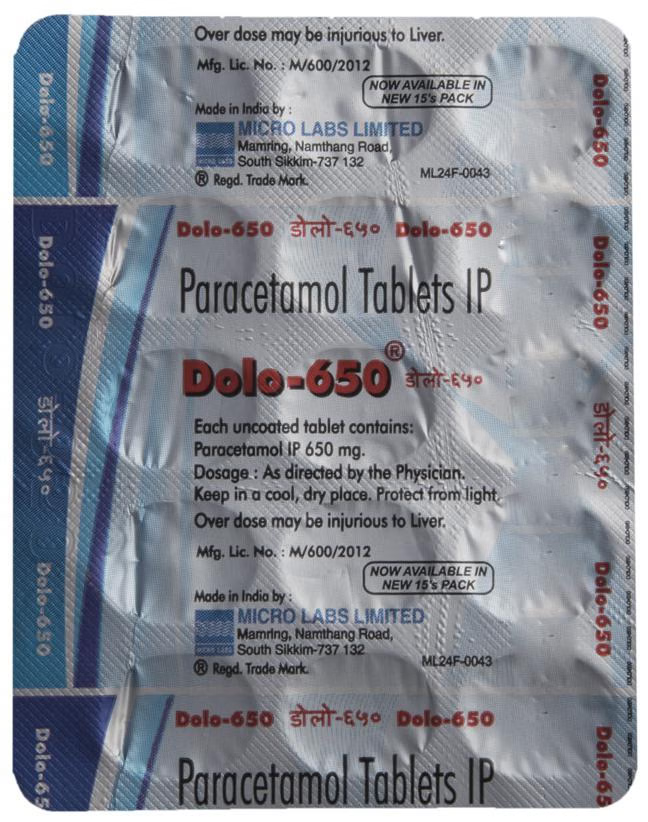 2Dolo 650 TabletMicro Labs Ltd₹33.90
- 3Crocin Advance 500 TabletGlaxoSmithKline Pharmaceuticals Ltd₹22.25
- 4Mox 500 CapsuleSun Pharmaceutical Industries Ltd₹72.80
- 5Glycomet 500 TabletUSV Pvt Ltd₹18.80
Ranked by how often readers opened a partner link in the last 30 days.
All medicines →